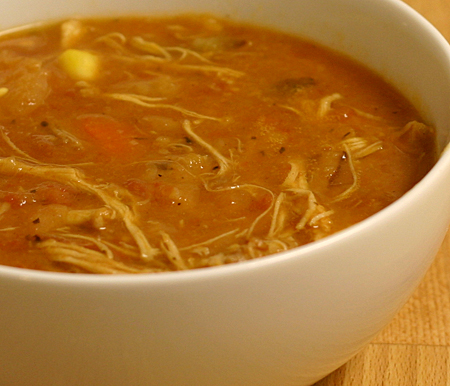
I'm ecstatic right now. I have a lot of recipes in the queue, but I have to tell you about this one immediately. One of my absolute favorite meals in the world (perhaps THE favorite) is my grandmother's vegetable soup with cornbread. The soup has a creamy tomato base with a bit of a kick (thanks to Tabasco), and is filled with butter beans, okra, corn, and potatoes. My cousins and I fight over the soup, and I'm really hoping that Grandmother remembers that I organized and catalogued her chest freezer last month and will give me at least one of the three containers of soup she has left. And very similar to her vegetable soup is her perlue stew (a few Google searches revealed that people spell it all kinds of ways: purlo, perlo, and purlew are just a few). Perlue stew has a very similar base, but typically contains chicken, rice, potatoes, and corn. It's heavenly as well, but for some reason Grandmother didn't make it nearly as often. Unfortunately I've been intimidated to make both. I'm afraid to even attempt her vegetable soup because, let's be real, it won't be the same. I've pleaded for a recipe, but it's one of those things where she throws things in the pot and "knows" when it's right. I do have her recipe for purlue stew, but nobody else in the family has succeeded at replicating it (and Mom found out the hard way that you must use a roaster chicken because of its higher fat content).
But then last month I was flooded by recipes for Brunswick stew from the Daring Cooks challenge. Brunswick stew is a combination of Grandmother's vegetable soup and purlue stew. It has some kind of meat (typically beef, pork, or chicken along with some random other ones - sometimes squirrel or rabbit), butter beans, corn, potatoes, tomatoes, and sometimes okra. But that creamy tomato base is common among all of three of them (apparently to Burgoo as well, which I've never tried, but is basically Kentucky's version of this stew). I associate Brunswick stew with barbecue restaurants. If a restaurant doesn't sell Brunswick stew, don't eat the barbecue there. Trust me.
The influx of Brunswick stew recipes last month made me drool, and I'm trying to eat up the cooked butter beans I have in my freezer, so I had to make this, and boy am I glad I did. I don't know if this is the absolute best Brunswick stew I've ever had, but it's pretty close. I'm used to the Georgia-style stew with beef, so the chicken version (more typical of Virginia) was different but equally as enjoyable. If it follows the Rule of Soups and Stews (they get better and better as the days go by), I'll be in heaven all week. And even more exciting is that the base is the exact same creamy tomato base of Grandmother's vegetable soup. Forget the PhD, I'm far more proud that I've mastered the stew/soup base that I love so much!
Brunswick stew (loosely adapted from What We're Eating)
(Printable version)
2 strips of bacon
1 large onion, chopped
2 small peppers, diced (I used dried Thai chilies because that's all I had, but jalapenos or serranos are preferable)
2 1/2 pounds chicken thighs, skin removed
5 cups chicken stock
2 bay leaves
2 tsp Tabasco or other hot sauce
freshly ground black pepper
2 carrots, diced
4 small red potatoes, chopped
2 1/2 cups cooked butter beans
1 cup corn (fresh or frozen)
1/3 cup ketchup
1 large can (28 oz) crushed tomatoes
Cook bacon in a large soup pot over medium heat. When it's done, place it aside on paper towels and crumble it. Add the onions and peppers to the bacon grease and cook until the onion is tender. Then push the onions to the side of the pot, and add the chicken, making sure that it's touching the bottom of the pot as much as possible. Sear the chicken on both sides (a few minutes per side), and then add stock, bay leaves, Tabasco, and black pepper to the pot. If the chicken isn't covered by the stock, add more until it's almost completely submerged. Bring the stock to a boil, then reduce heat and simmer for 30 min. Remove the chicken from the pot and set it aside to cool. Then add carrots, potatoes, butter beans, corn, ketchup, tomatoes, and crumbled bacon to the pot. When the chicken is cool enough to handle, shred it and add the meat to the pot. Then bring the stew back to a boil, reduce heat to medium low, cover, and cook for 90 min, stirring occasionally. If the stew base is very watery, leave the cover off for a while so it can thicken, or add more stock or water if it's too thick. After the stew is done, mash the stew with a potato masher for a few minutes to create the creamy base. Taste and add more Tabasco if necessary, and remove the bay leaves. Serves 6-8.
Monday, May 17, 2010
Thursday, May 13, 2010
Fig, pecan, and flax crackers recipe
Since I've started packing up my apartment, I've become even more sensitive to the fact that nobody wants more junk to sit around. So for Mother's Day, I wanted to give Mom something useful. Between work and taking care of my grandmother, she has been excessively busy lately, so I decided to make her a care package of sorts, with healthy snacks that would keep her going at work and on her weekend trips. It was also a present for me because it gave me an excuse to try new recipes (thanks, Mom!). These crackers sounded perfect for Mom, so I gave 'em a shot. They recipe made more than I expected, though, and I ended up taking some to a cookout with friends. Between my friends and my parents, I've heard a lot of good things about these crackers. I loved them, too, and had to package them up before I scarfed them all down. And best of all, these crackers are the easiest ones I've ever made. They're thick, and don't require the use of a rolling pin (I'm still not very skilled with my rolling pin). In fact, their appearance is more similar to a cookie than a cracker, and they do have a hint of sweetness from the figs and brown sugar. Sweet cracker? Savory cookie? Call them whatever you want, but I highly suggest making them.
Fig, pecan, and flax crackers (adapted from life as a h4)
(Printable version)
1/3 cup flax seeds (whole ones, not ground)
1/4 cup almond or flax meal
1 1/2 cups gluten-free baking mix (or white or whole wheat flour)
1/2 tsp baking powder
1/4 tsp salt
1 Tbsp brown sugar
4 Tbsp butter, cut into small pieces
1/4 cup chopped pecans
1 cup dried figs, chopped
1/2 cup milk (or more, if necessary)
Combine flax seeds, almond or flax meal, baking mix, baking powder, salt, and brown sugar in a large mixing bowl. Using a pastry cutter or two knives, cut the butter into the mixture until the butter is in tiny pieces and well distributed throughout the flour/flax/etc. Add the pecans, figs, and milk to the bowl, and stir until everything is mixed well. If you're having trouble incorporating all of the flour into the dough, add milk a tablespoon at a time (I added about 1/4 cup more). Cover the bowl with plastic wrap and refrigerate for 10 min. Then divide the dough into two pieces and roll each piece into a log with a 2" diameter. Using a sharp knife, slice the log into 1/4" slices and place them on baking sheets lined with parchment paper (some of my crackers fell apart as I was slicing the logs, but I pieced them back together and it worked fine). Then bake the crackers at 325 for 20-30 min, until they are golden brown. Let them cool before serving or storing. Makes about 30 crackers.
Labels:
fruit,
gluten-free,
nuts,
snack,
vegetarian
Tuesday, May 11, 2010
Let's talk about sorghum
I'm guessing that a lot of people have had sorghum syrup at some point in their lives. And those of us who have adopted a gluten-free diet have almost surely had sorghum flour and sorghum-based beer. In fact, I use sorghum flour more than any other type because it seems to work as a multi-purpose flour and has a mild taste that is great in all kinds of baked goods. However, I hadn't seen sorghum grains until I received a bag of sorghum from Shiloh Farms as part of the first place prize package in the Whole Grains Council's photo contest last fall.
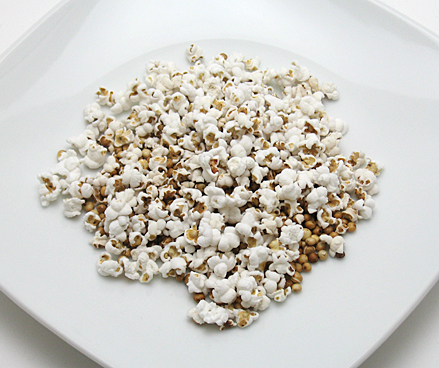
Sorghum grains are round, similar to millet or quinoa but much larger. The bag listed several cooking options, and suggested popping it. This intrigued me, so I immediately used my favorite method of making popcorn with the sorghum (put a handful in a paper lunch bag, roll the top over a few times, and cook in the microwave on the popcorn setting). It was good. Really good. It tasted similar to popcorn, with a slight millet-like quality. The only problem was that many of the kernels didn't pop, but I'm wondering if this could be remedied by cooking it on the stove.
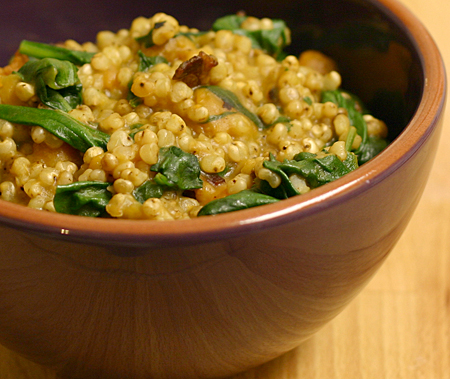
I only had one bag of it, though, so I decided that I should resist popping all of it and try another cooking method. And then I forgot about it for 5 months. I recently rediscovered my sorghum while taking an inventory of my pantry in preparation for my upcoming move, and finally got around to cooking more of it. There was a recipe for sorghum pilaf on the bag, so I decided that was the route to take. But instead of following that recipe, I substituted my sorghum for quinoa in a pilaf with sweet potato, spinach, and bacon that I found at Sounding My Barbaric Gulp!. First, I must tell you that sorghum takes forever to cook (about an hour and a half), so I was hoping that it would be tasty enough to compensate for the time. And I was also hoping to share an amazing recipe for sorghum because I had an extraordinarily tough time finding anything online. The first few bites were good, very different, but pretty good. It had a much stronger flavor than it did when popped, very earthy I would say. But by the fourth bite I had had enough. I've been able to eat a bite here and there because I hate to throw away leftovers, but I can't take anymore.
So unfortunately I don't have a recipe to share, but do try popping it if you ever come across sorghum grains (that's what will happen with the remainder of my bag). And I bet this pilaf would be good with quinoa, as it was originally made. I'm disappointed that I didn't find my new favorite whole grain, and even more perplexed at how sorghum could be so great in other forms. It was a fun experiment, though!
Labels:
gluten-free,
grains
Sunday, May 9, 2010
Rhubarb and strawberry compote recipe
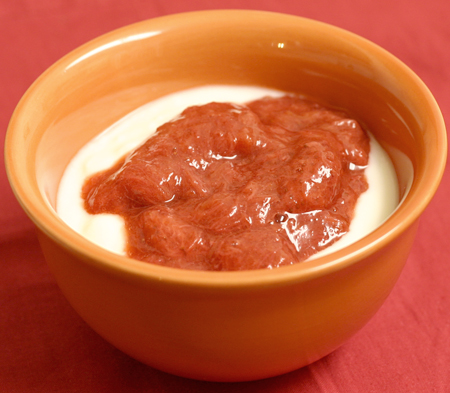
My favorite farmers' market opened last weekend, and I'm so happy to have plans every Saturday morning again. I'm trying to enjoy the spring offerings and not think about the fact that I'll move before the market really gets going. Last week I picked up rhubarb on a whim. The challenge with rhubarb is that most recipes call for tons of sugar to cancel out its sour nature. However, I really enjoy rhubarb's sourness, and I also try to avoid much added sugar. So, I decided to cook the rhubarb into a compote with strawberries (for some natural sweetness) and then added small amounts of honey until I was satisfied with the flavor. Luckily my strawberries were very sweet and in the end I didn't have to add much honey at all. I've added this compote to yogurt and oatmeal for breakfast, and I've also eaten in by itself as a dessert because it's just that good. I just finished the last of it and I'm kicking myself for not getting more rhubarb at the market this morning. I'm submitting this dish to Weekend Herb Blogging, which is organized by Haalo from Cook (almost) Anything At Least Once, and hosted by Lynne from Cafe Lynnylu this week.
Rhubarb and strawberry compote
(Printable version)
5 large stalks of rhubarb, chopped into 1/2" pieces
1 lb strawberries, tops removed and halved
1 Tbsp honey or agave nectar (to your taste)
Put the rhubarb and strawberries in a large saucepan and cook over medium-low heat, stirring occasionally. When the fruit has broken down significantly (after about 20 min), add honey or agave until it's sweet enough for you. Continue to cook for 10-20 more min. Makes about 2 cups.
Labels:
breakfast,
dessert,
fruit,
gluten-free,
honey,
vegan,
vegetarian,
weekend herb blogging
Tuesday, May 4, 2010
Oat-crusted chicken recipe
First off, I really appreciate all of the comments everyone left on my post about my grandpa. And while I was spending time with my family last weekend, I learned the secrets of my grandmother's fried chicken. She hasn't made it in years, but the whole family remembers how delicious it was. Apparently it requires cutting up your own chicken so that the pieces are the same size, removing the skin, seasoning the chicken (not the flour), soaking the chicken in buttermilk for 24 hours before dipping it in flour, and then cooking it low and slow. One day for a special occasional I'll get around to trying this method (I doubt that it will be as good as Grandmother's.... nothing ever is), but before I learned the secrets I made this incredibly easy oat-crusted chicken. This was incredibly delicious the night I made it, very crispy on the outside and tender and juicy on the inside, but it's not something you want to eat leftover. Just trust me on that one.
Now that April is behind us, it's time to wrap up the cookbook of the month, Whole Grains for Busy People. Overall this is a fantastic cookbook if you're trying to ease whole grains into your meals or trying to cook whole grains with limited time. My favorite recipe was the turkey ragu I made last month. Even when I lost my appetite before my dissertation defense, I still wanted to eat it. I also really enjoyed the macaroni and cheese with chicken and spinach, thai fish curry, and this chicken (the night I made it). The hominy and bean chili wasn't my favorite recipe for chili, but it was pretty good too. None of these recipes are going to win awards, but they're tasty, healthy recipes, and will give you a satisfying meal at the end of a long day. If you have more time and only want to buy one book, I would recommend buying Lorna Sass's Whole Grains Every Day, Every Way, but this book is probably more suitable for most people who simply want a fast way to get healthy food on the table.
Oat-crusted chicken recipe (adapted from Whole Grains for Busy People)
(Printable version)
2 chicken breasts
salt and pepper
1/3 cup sorghum flour
2/3 cup rolled oats
zest of one lemon
1 egg, beaten
1 Tbsp olive oil
Season both sides of the chicken with salt and pepper. Spread the flour out on one plate, and combine the oats and lemon zest and spread on a separate plate. Pour the beaten egg into a wide, shallow bowl. Dredge each chicken breast in flour, then dip it in the egg, then coat it in the oat mixture. Heat the oil in a large skillet over medium heat. Brown both sides of the chicken (about 2 min per side), then cover the skillet, reduce heat to low, and let cook until chicken is cooked through (about 10 min). Serves 2-4.
Labels:
chicken,
gluten-free,
grains
Subscribe to:
Posts (Atom)